Dec 25, 2025
How to Choose the Right 78 Connector for Your Electrical or Mechanical System
Selecting the appropriate ipex rf connector is not simply a matter of choosing a compatible part number. It requires a detailed understanding of system requirements, including frequency range, mechanical constraints, environmental conditions, and production considerations.
This article explores the selection process from a technical perspective, highlighting the key factors that influence connector performance and how to align these factors with specific application needs. It also demonstrates how CAZN Electronic supports customers in making informed decisions through engineering expertise and high-quality manufacturing.
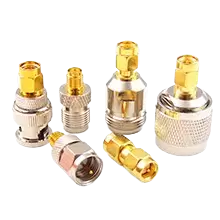
The first step in selecting an ipex rf connector is determining the operating frequency of the application. Different connector series are designed to support different frequency ranges, and selecting a connector with insufficient bandwidth can result in significant signal loss and performance degradation.
For applications operating below 3 GHz, such as standard Wi-Fi or Bluetooth, MHF I or MHF II connectors are often sufficient. As frequency increases, particularly in applications such as Wi-Fi 6E or 5G, higher-performance connectors like MHF III or MHF IV become necessary.
The relationship between frequency and connector performance is not linear. As frequency increases, insertion loss and return loss become more sensitive to small variations in connector geometry and material properties. This makes precision manufacturing and quality control even more critical.
CAZN Electronic ensures that each connector series is optimized for its intended frequency range, providing reliable performance across a wide spectrum of applications.
Modern electronic devices often impose strict constraints on size and weight. The choice of connector must therefore consider not only electrical performance but also physical dimensions and integration requirements.
Connector height, footprint, and cable routing all play a role in system design. Ultra-low profile connectors are essential in compact devices, but they may require more precise assembly and handling.
The orientation of the connector, whether vertical or right-angle, affects cable routing and overall system layout. In some cases, custom cable assemblies may be required to achieve optimal integration.
CAZN Electronic offers a range of connector configurations to accommodate different design requirements, ensuring that mechanical constraints do not compromise system performance.
Different applications impose different environmental stresses on connectors. In consumer electronics, connectors may experience frequent mating cycles and exposure to varying temperatures. In industrial or automotive environments, vibration, humidity, and chemical exposure become significant factors.
Selecting a connector with appropriate durability characteristics is essential for ensuring long-term reliability. This includes considering mating cycle ratings, material properties, and surface treatment.
For example, connectors used in automotive applications may require enhanced vibration resistance and temperature stability, while those used in industrial environments may need additional protection against corrosion and contamination.
CAZN Electronic designs its connectors to meet the specific environmental requirements of each application, ensuring consistent performance under challenging conditions.
The performance of an ipex rf connector is closely linked to the quality of the cable assembly. Micro coaxial cables must be carefully selected to match the connector and application requirements.
Cable impedance, shielding effectiveness, and flexibility all influence overall system performance. Poor cable quality can negate the advantages of a high-quality connector, leading to signal loss and reliability issues.
Assembly quality is equally important. Proper crimping, soldering, and inspection processes are required to ensure consistent performance. Automated assembly techniques can improve consistency and reduce the risk of human error.
CAZN Electronic provides integrated connector and cable solutions, ensuring compatibility and performance across the entire signal path.
While high-performance connectors offer clear advantages, cost considerations cannot be ignored. The goal is to achieve the required performance at the lowest total cost, rather than simply selecting the cheapest component.
This involves evaluating trade-offs between connector series, material quality, and manufacturing processes. In some cases, a slightly higher-cost connector can deliver significant savings by reducing rework, improving yield, and enhancing product reliability.
CAZN Electronic works closely with customers to identify the most cost-effective solutions, balancing performance requirements with budget constraints.
Selecting the right ipex rf connector requires a comprehensive understanding of both technical requirements and application conditions. By focusing on factors such as frequency, mechanical constraints, environmental conditions, and system integration, it is possible to achieve optimal performance and reliability.
CAZN Electronic’s expertise in industrial connectivity, combined with its commitment to quality and innovation, ensures that its ipex rf connector solutions meet the demands of modern high-frequency applications.
Privacy Policy