Dec 23, 2024
Discover the Versatility of M16 Angled Male Overmolded Plug for Seamless Connections
In modern electronic systems, where signal density continues to increase and device size continues to shrink, the interface between RF modules and antennas has become a critical point of performance risk. The ipex rf connector has emerged as a preferred solution in compact RF architectures, particularly in applications such as wireless communication modules, IoT devices, automotive electronics, and high-speed data transmission systems.
This article examines ipex rf connectors from a technical and application-driven perspective, focusing on how electrical performance, mechanical design, and manufacturing precision directly influence signal integrity and long-term reliability. It also reflects how companies like CAZN Electronic leverage industrial-grade connector expertise to deliver consistent performance across demanding environments.
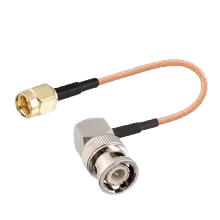
At its core, an ipex rf connector is a miniature coaxial connector system designed to provide stable RF signal transmission between a PCB-mounted socket and a cable assembly. Unlike traditional SMA or SMB connectors, ipex connectors are optimized for space-constrained environments where board real estate and connector height are critical constraints.
The connector typically consists of a surface-mounted receptacle (mounted on the PCB) and a plug connected to a micro coaxial cable. The interface relies on a snap-on mating mechanism, enabling quick assembly without soldering the cable directly to the board.
From an electrical standpoint, the connector maintains a characteristic impedance of 50 ohms, which is essential for minimizing signal reflection and ensuring efficient power transfer. The impedance matching is achieved through precise control of conductor geometry, dielectric materials, and shielding structure.
Connector series such as MHF I, MHF II, MHF III, and MHF IV differ primarily in size, frequency range, and mechanical durability. For example, MHF I connectors typically support frequencies up to 6 GHz, while MHF IV connectors can operate reliably up to 9 GHz or higher, depending on cable and assembly quality.
Signal integrity is the primary performance metric when evaluating any RF connector. In the case of ipex rf connectors, insertion loss, return loss, and shielding effectiveness are the key parameters that determine performance in high-frequency environments.
Insertion loss represents the amount of signal power lost as the signal passes through the connector. For high-quality ipex connectors, insertion loss is typically less than 0.5 dB at 3 GHz and remains within acceptable limits even at higher frequencies. This low loss is critical in applications such as Wi-Fi 6, LTE, and 5G modules, where signal attenuation directly impacts communication range and data throughput.
Return loss, which indicates how much signal is reflected back due to impedance mismatch, is another crucial parameter. A well-designed ipex connector can achieve return loss values better than -20 dB across its operating frequency range, ensuring minimal reflection and stable signal transmission.
Shielding effectiveness is equally important, especially in environments with high electromagnetic interference. The coaxial structure of the connector, combined with high-quality shielding materials, helps maintain signal integrity even in densely packed electronic assemblies.
CAZN Electronic applies strict process control to ensure that each connector meets these performance requirements, leveraging precision stamping, plating, and assembly techniques to maintain consistent electrical characteristics.
While electrical performance is critical, mechanical reliability often determines the real-world usability of ipex rf connectors. The miniature size of these connectors introduces challenges in alignment, mating force, and durability.
Typical mating cycles for ipex connectors range from 30 to 50 cycles, depending on the series. This limitation means that connectors are generally intended for applications where repeated disconnection is not frequent. However, within their specified lifecycle, they must maintain stable contact resistance and mechanical integrity.
The snap-on mechanism requires precise alignment during installation. Misalignment can lead to incomplete mating, increased contact resistance, or even physical damage to the connector. As a result, PCB layout and mechanical design must account for connector accessibility and alignment tolerance.
Connector height is another important factor. Ultra-low profile designs, often below 2 mm in height, enable integration into compact devices such as smartphones, drones, and wearable electronics. However, reducing height also increases sensitivity to mechanical stress, making material selection and structural design even more critical.
CAZN Electronic addresses these challenges through high-precision tooling and rigorous quality inspection, ensuring that each connector meets tight dimensional tolerances and delivers consistent mating performance.
The versatility of ipex rf connectors makes them suitable for a wide range of applications, each with its own set of technical requirements. In wireless communication modules, they are commonly used to connect antennas to RF front-end circuits, enabling flexible antenna placement and improved signal performance.
In automotive electronics, particularly in advanced driver-assistance systems (ADAS) and infotainment systems, ipex connectors are used to support GPS, LTE, and Wi-Fi communication. These applications require connectors that can withstand vibration, temperature variation, and long-term mechanical stress.
Industrial applications, including smart manufacturing and intelligent transportation systems, also rely on ipex connectors for compact and reliable RF connections. In these environments, connectors must maintain performance under conditions such as electromagnetic interference, dust exposure, and temperature fluctuations.
CAZN Electronic’s experience across industries such as wind power, high-speed rail, and automotive manufacturing enables it to design connector solutions that meet the specific demands of each application scenario.
The performance of an ipex rf connector is closely tied to the quality of the PCB design. Improper layout can negate the advantages of a high-quality connector, leading to signal degradation and system instability.
Controlled impedance routing is essential. The trace connecting the connector to the RF circuit must maintain a consistent 50-ohm impedance, which requires careful control of trace width, dielectric thickness, and ground plane configuration.
Grounding is another critical factor. A solid ground connection around the connector helps maintain shielding effectiveness and reduces electromagnetic interference. Via stitching around the connector area is often used to enhance grounding performance.
Keep-out zones should be defined to prevent interference from nearby components. High-frequency signals are sensitive to parasitic capacitance and inductance, which can be introduced by adjacent conductive structures.
By aligning connector design with PCB layout best practices, CAZN Electronic ensures that its ipex rf connectors deliver optimal performance in real-world applications.
Material selection plays a significant role in both electrical and mechanical performance. The central conductor is typically made of copper alloy with gold plating to ensure low contact resistance and resistance to oxidation.
The outer conductor and shielding components are also made of conductive materials with appropriate plating to maintain signal integrity and durability. The dielectric material, often a high-performance polymer, must provide stable electrical properties across a wide temperature range.
Surface treatment processes such as gold plating thickness, typically ranging from 0.1 to 0.5 microns, directly impact connector performance and lifespan. Thicker plating improves durability but increases cost, requiring a balance between performance and economic considerations.
CAZN Electronic employs advanced plating technologies and strict quality control to ensure consistent material properties and surface finish across all connectors.
In high-volume production environments, the cost of connectors can have a significant impact on overall product cost. However, focusing solely on unit price can lead to hidden costs related to performance issues, rework, and field failures.
A reliable ipex rf connector reduces the risk of signal degradation, minimizes assembly errors, and ensures consistent performance across production batches. This translates into lower total cost of ownership, even if the initial unit price is higher.
Supply chain stability is another important factor. Consistent quality, reliable delivery, and technical support are essential for maintaining production schedules and product quality.
CAZN Electronic combines manufacturing expertise with supply chain management to provide connectors that meet both performance and cost requirements, supporting large-scale production with consistent quality.
As wireless technologies continue to evolve, the demands on RF connectors are becoming more stringent. Higher frequencies, such as those used in 5G and beyond, require connectors with lower loss and shielding performance.
Miniaturization will continue to drive connector design, pushing the limits of manufacturing precision and material performance. At the same time, the need for higher reliability in harsh environments will require innovations in mechanical design and surface treatment.
CAZN Electronic is actively investing in research and development to address these challenges, ensuring that its ipex rf connector solutions remain aligned with the future needs of the industry.
The ipex rf connector is a critical component in modern electronic systems, enabling reliable and efficient RF signal transmission in compact designs. Its performance is determined by a combination of electrical characteristics, mechanical design, and manufacturing precision.
By focusing on these factors, manufacturers like CAZN Electronic deliver connectors that meet the demands of high-frequency applications across multiple industries. The result is a connectivity solution that supports both current and future technological advancements, providing a solid foundation for reliable system performance.
Privacy Policy