Jan 03, 2025
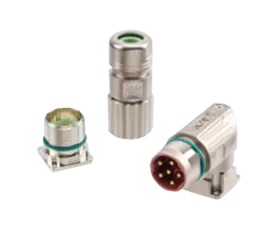
Exploring the Design Features of E10 Straight Female Field Installable Plugs
As industrial systems become increasingly digitized, the industrial usb connector plays a central role in bridging embedded controllers, diagnostic systems, and machine-level communication modules. Its function is no longer limited to data transfer—it has become a critical interface influencing system reliability, maintenance efficiency, and operational continuity.
Unlike consumer connectors, industrial USB systems must maintain performance under electrical noise, mechanical stress, and environmental exposure while supporting continuous data exchange in mission-critical applications.

CAZN Electronic develops industrial connection systems that comply with IEC, GB/T, and UL standards, supporting applications across intelligent transportation, renewable energy systems, and advanced manufacturing platforms.
At the core of every industrial USB connector is the contact interface between conductive terminals. This interface determines long-term signal stability.
Key physical parameters include:
Over time, repeated mating cycles can degrade contact surfaces, leading to:
To mitigate this, industrial connectors often use gold-plated contact surfaces with controlled micro-thickness plating layers to ensure consistent conductivity across extended lifecycle usage.
Modern industrial systems frequently rely on USB interfaces for:
As USB standards evolve toward higher speeds (USB 3.0 and above), signal integrity becomes increasingly sensitive to impedance mismatch and crosstalk.
Critical design constraints include:
Even minor deviations in connector geometry can introduce measurable signal degradation at high data rates.
Industrial environments often involve continuous system operation with limited cooling.
Although USB connectors are low-power components, thermal effects still arise from:
Thermal expansion can subtly affect contact pressure and alignment, leading to long-term instability if not properly designed.
Industrial-grade connectors are engineered to maintain stable mechanical contact pressure across a wide temperature range, typically from -40°C to +85°C or higher depending on application requirements.
Industrial USB connectors must integrate seamlessly into complex electromechanical systems.
Standardization considerations include:
Improper mechanical integration can lead to:
Standardized connector design improves interchangeability and reduces system downtime during maintenance cycles.
Industrial connectors operate in environments where exposure to:
can significantly affect long-term performance.
Material selection plays a key role in resistance to environmental degradation. Common strategies include:
These measures ensure stable electrical performance even in harsh operational conditions.
In industrial systems, connector failure can lead to significant downtime costs. Therefore, lifecycle reliability is a key design parameter.
Reliability modeling typically considers:
A well-designed industrial USB connector system reduces maintenance frequency by maintaining stable electrical and mechanical performance across its operational lifecycle.
Industrial USB connectors function as more than physical interfaces—they are system-level reliability enablers.
Their performance is defined by:
CAZN Electronic continues to develop industrial connection technologies aligned with IEC, GB/T, and UL standards, ensuring robust, stable, and long-life performance across modern industrial automation and digital infrastructure systems.
Privacy Policy