Jun 17, 2026
M16 Nano SIM Card Connector
In industrial systems, connectors are often treated as standardized components. However, in environments such as wind power, rail transit, and intelligent manufacturing, the performance of an e con connector directly affects signal integrity, power transmission stability, and long-term system reliability.
Failures at the connector level rarely remain isolated. A single point of contact degradation can lead to intermittent faults, system downtime, or even safety incidents. For procurement teams, engineers, and project managers, selecting the right connector is therefore not a catalog decision—it is a system-level engineering choice.
This article provides a technical framework to evaluate and select e con connectors based on real-world operating conditions, focusing on performance parameters, compliance requirements, and lifecycle cost.
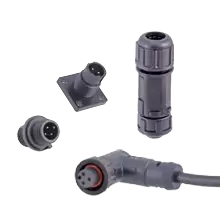
This article provides a technical framework to evaluate and select e con connectors based on real-world operating conditions, focusing on performance parameters, compliance requirements, and lifecycle cost.
An e con connector serves as the interface between electrical modules, enabling both power and signal transmission. In industrial environments, connectors must operate under conditions that include vibration, temperature fluctuation, humidity, and electromagnetic interference.
Unlike consumer-grade connectors, industrial e con connectors are designed with enhanced contact stability, sealing capability, and mechanical robustness. These characteristics are critical in applications such as:
The key requirement is not just connectivity, but consistent performance over time.
Electrical performance is the primary criterion when evaluating an e con connector.
Contact resistance is one of the most critical parameters. Typical high-quality connectors maintain contact resistance below 10 milliohms, ensuring minimal power loss and stable signal transmission. Variations in contact resistance can lead to heat generation and signal distortion.
Current carrying capacity must match application requirements. For power connectors, this can range from a few amperes to several hundred amperes. Undersized connectors can lead to overheating and premature failure.
Insulation resistance and dielectric strength determine the connector’s ability to prevent leakage and withstand voltage stress. In high-voltage applications, these parameters are essential for safety compliance.
Engineers must evaluate these parameters in the context of actual operating conditions rather than nominal specifications.
Industrial environments impose significant mechanical stress on connectors. Vibration, shock, and repeated mating cycles can degrade connection quality.
E con connectors designed for industrial use typically feature:
In high-vibration environments like rail systems, connectors must maintain stable contact without loosening over time. This requires precise design of contact springs and locking structures.
Mechanical durability is often measured in mating cycles, with industrial connectors typically rated for 500 to 5000 cycles depending on design.
Environmental factors significantly influence connector performance.
Temperature range is a key consideration. Industrial connectors often operate between -40°C and +125°C, depending on material selection. Thermal expansion and contraction can affect contact stability if not properly managed.
Ingress protection (IP rating) determines resistance to dust and water. For outdoor or harsh environments, connectors with IP67 or higher are typically required.
Corrosion resistance is particularly important in marine or chemical environments. Material selection and surface treatment must prevent degradation over time.
Manufacturers like CAZN Electronic design connectors in compliance with IEC, GB/T, and UL standards, ensuring that environmental performance meets international requirements.
With the rise of intelligent manufacturing and digital systems, connectors increasingly carry high-speed signals.
Signal integrity depends on factors such as:
In applications such as industrial automation and transportation systems, poor signal integrity can lead to data errors and system instability.
High-performance e con connectors incorporate shielding and optimized contact geometry to maintain signal quality even in electromagnetically noisy environments.
Different industries impose different requirements on connectors.
In wind power systems, connectors must withstand continuous vibration and extreme weather conditions. In rail systems, safety and reliability are paramount, requiring strict compliance with standards.
In automotive manufacturing, connectors must support high الإنتاج volumes while maintaining consistent quality. In intelligent manufacturing, flexibility and ease of installation are important.
Selecting the right connector involves matching its design and performance characteristics to the specific application rather than relying on generic specifications.
From a procurement perspective, connector cost must be evaluated in terms of total lifecycle value.
Lower-cost connectors may reduce initial investment but increase the risk of failure, leading to higher maintenance costs and downtime. High-quality connectors, while more expensive upfront, offer longer service life and greater reliability.
Lifecycle cost considerations include:
In critical systems, the cost of failure often far exceeds the cost difference between connector options.
Selecting a connector supplier involves evaluating not only the product but also the manufacturer’s capabilities.
Key factors include:
CAZN Electronic, with its focus on industrial connection technology and applications in sectors such as wind energy and rail transit, demonstrates the importance of combining product quality with industry-specific expertise.
Choosing the right e con connector requires a comprehensive understanding of electrical, mechanical, and environmental requirements.
For engineers, the focus should be on performance and compatibility. For procurement teams, the priority is lifecycle cost and supply reliability. For project managers, consistency and risk reduction are key.
In industrial systems where reliability is critical, connectors should be treated not as commodities, but as strategic components that enable stable and efficient operation.
Privacy Policy