Apr 17, 2026
Te Rf connectors in High-Frequency Systems: Impedance Control, Signal Integrity, and Mechanical Reliability
Smart agriculture is a digital agricultural model that uses modern information technology as its core and reconstructs the entire agricultural production chain through technologies such as the Internet of Things (IoT), big data, and artificial intelligence (AI). Its essence is to achieve optimized resource allocation and precise management through a closed-loop system of “sensing—analysis—decision-making—execution.” By combining modern biotechnology and planting and breeding technologies, smart agriculture enables comprehensive perception, quantitative decision-making, intelligent control, precise input, and professional services in agricultural production, operation, and management. It also makes agricultural production more convenient, improves management efficiency, and promotes the development of agricultural modernization. Its main characteristics include the following:

Smart agriculture integrates multiple information technologies, including the Internet of Things, big data, and artificial intelligence, to achieve real-time monitoring and intelligent management of agricultural production processes.
By using sensors and monitoring equipment, smart agriculture can comprehensively detect various indicators in agricultural production, such as soil moisture, temperature, and light intensity.
Based on the collected data, smart agriculture can conduct quantitative analysis to assist agricultural producers in making more scientific decisions.
Automated control systems can automatically adjust agricultural production environments according to preset conditions, such as automatic irrigation, fertilization, and temperature and humidity control.
Through precise control of resources such as water and fertilizer, smart agriculture helps reduce waste and improve resource utilization efficiency.
Smart agriculture also provides professional services including agricultural technology consulting, agricultural product market information, and pest and disease early warning and prevention, helping farmers improve production efficiency and management capabilities.
Through intelligent analysis and decision-making, smart agriculture helps optimize agricultural resource allocation, reduce waste, and improve agricultural production efficiency and management levels.
Smart agriculture helps achieve sustainable agricultural development through precise management and optimized resource allocation, reducing the impact on the environment.
By accurately controlling production processes, smart agriculture helps improve the quality and safety of agricultural products.
Smart agriculture not only involves the production process but also includes intelligent management throughout the entire agricultural industry chain, including processing, logistics, and sales.
Smart agriculture will further integrate technologies such as blockchain and 5G communication, deepen applications in areas such as agricultural product traceability and supply chain management, and promote the transformation of agriculture from individual production processes toward full industry-chain digitalization. At the same time, emerging scenarios such as the low-altitude economy and AI-based agricultural forecasting will continue to expand the boundaries of agricultural modernization.

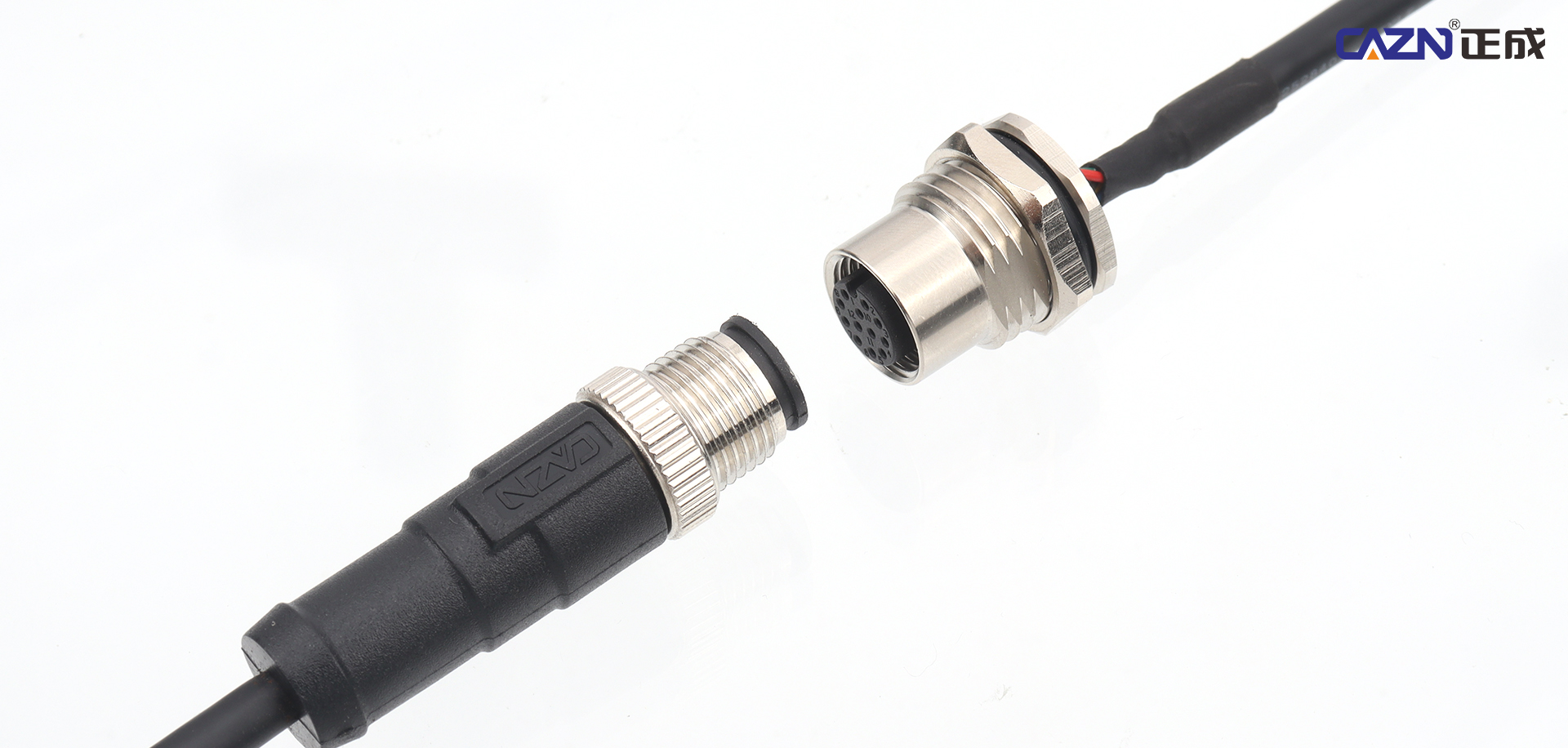
M-Series circular connectors support fast connection and replacement, comply with international standards, and are suitable for reliable connections between power units and sensors in agricultural machinery.
Rich Interface Options:Support integrated transmission of multiple signal types, including power, data, and sensor signals.
Easy Maintenance:The modular design enables quick replacement of faulty components, reducing maintenance costs.
Strong Expandability:The number and types of interfaces can be flexibly increased according to the upgrade requirements of agricultural equipment.


Privacy Policy