Jul 03, 2026
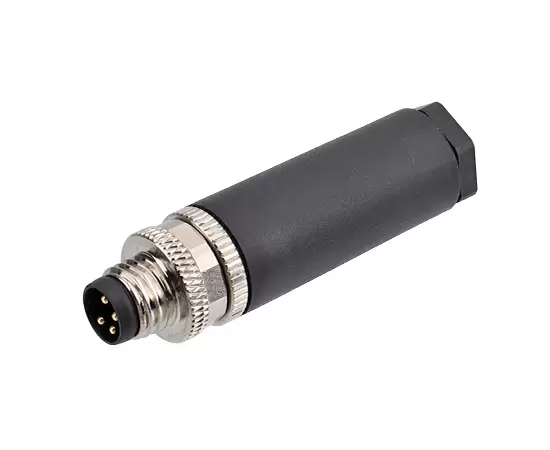
Installation Procedure of E-Series Waterproof Connectors
In industrial-grade communication and control systems, te rf connectors serve as the critical interface between transmission media and electronic subsystems. Their performance determines not only signal quality but also system uptime, maintenance cycles, and long-term operational cost.
Unlike consumer-grade connectors, industrial RF connectors must maintain stable performance under vibration, temperature extremes, humidity, and electromagnetic interference. This makes reliability engineering a core requirement rather than an optional enhancement.
This article focuses on the lifecycle engineering of te rf connectors, including failure mechanisms, environmental stress factors, installation practices, and maintenance strategies in real industrial environments.

In industrial RF systems, reliability is defined by three measurable dimensions:
A connector is considered reliable only if it maintains:
Even minor degradation in any of these parameters can cause system-level instability in RF networks.
te rf connectors operate in harsh environments where multiple failure mechanisms occur simultaneously.
Repeated mating cycles cause micro-abrasion between contact surfaces, leading to:
This is especially critical in systems with frequent maintenance cycles.
Exposure to humidity, salt fog, or industrial pollutants leads to:
In vibration-heavy environments such as railways and wind turbines:
Insulating materials may degrade under:
This results in impedance instability and phase distortion.
Industrial systems often experience:
Thermal expansion mismatch between materials leads to mechanical stress accumulation.
In enclosed cabinets or outdoor systems:
Typical industrial vibration profiles:
These conditions require connectors with high retention force and robust mechanical locking systems.
High-performance te rf connectors use:
This ensures stable impedance under mechanical stress.
Instead of single-point grounding, industrial connectors use:
This improves EMI resistance significantly.
Environmental protection is achieved through:
High-end designs achieve IP67–IP68 protection levels.
Even the best-designed connector can fail if improperly installed.
Threaded RF connectors require precise torque application:
Typical torque range:
Improper stripping or shielding exposure can cause:
Misalignment during mating leads to:
te rf connectors can achieve significantly longer service life when properly managed.
Industrial systems often implement:
Well-maintained connectors can extend service life from:
RF connectors are not isolated components—they directly influence system-level performance.
Failures can lead to:
In distributed systems, a single connector failure can propagate:
This makes connector reliability a foundational element of system design.
Industrial-grade te rf connectors require strict manufacturing control:
Consistency across batches ensures predictable system behavior in large-scale deployments.
CAZN Electronic specializes in industrial connection technologies used in:
By adhering to IEC, GB/T, and UL standards, CAZN ensures that te rf connectors meet strict performance and safety requirements across global industrial environments.
In industrial RF systems, connector performance is not defined at installation—it is defined over time under stress.
True reliability depends on:
When these factors are properly engineered, te rf connectors become long-life infrastructure components rather than consumables.
In modern industrial connectivity systems, reliability is not a feature of RF connectors—it is their core engineering purpose
Privacy Policy