Nov 13, 2025
What Is an RF V Connector and How Does It Improve High-Frequency Signal Performance?
In industrial environments, connector selection is often treated as a catalog decision—voltage rating, pin count, and enclosure type. However, in real-world operation, the performance of an industrial plug connector is defined less by its nominal specification and more by how it behaves under failure stress, aging, and repeated operational cycles.
For industries such as wind energy, rail transit, automotive production, and intelligent manufacturing, connector reliability is directly linked to system uptime. A single contact failure can cascade into control interruptions, sensor data loss, or unplanned shutdowns. This is why modern connector engineering increasingly focuses on lifecycle behavior rather than only initial performance.
CAZN Electronic, a specialist in industrial connection systems aligned with IEC, GB/T, and UL standards, designs industrial plug connectors with a failure-mode-driven methodology, ensuring stable operation across long-term industrial deployment scenarios.
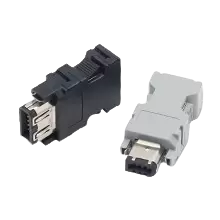
Instead of viewing connectors as static components, reliability engineering treats them as systems exposed to mechanical, electrical, and environmental stress over time. The most common failure modes in industrial plug connector systems include contact degradation, insulation breakdown, sealing fatigue, and mechanical loosening.
Contact degradation typically occurs due to micro-oxidation, fretting corrosion, or insufficient contact force. Even a slight increase in contact resistance can generate localized heating, which accelerates material degradation and reduces service life.
Insulation breakdown is often driven by thermal cycling or contamination ingress, where repeated expansion and contraction create micro-cracks in insulating materials. Over time, these defects compromise dielectric strength.
Mechanical loosening is particularly relevant in high-vibration applications such as rail systems or rotating machinery, where repeated stress gradually reduces locking integrity.
CAZN Electronic addresses these failure mechanisms through targeted structural reinforcement and material optimization rather than relying solely on nominal ratings.
The electrical interface inside an industrial plug connector is not a static point of contact but a dynamic system affected by micro-movements during operation. Even when connectors are fully locked, vibration and thermal expansion introduce microscopic displacement between contact surfaces.
This phenomenon, known as fretting motion, is one of the leading causes of long-term connector degradation.
To counter this, contact systems are designed with controlled elastic deformation zones. These ensure that contact pressure remains within a stable range even under mechanical stress variation.
Key design principles include:
Maintaining consistent contact force across full mating tolerance
Using multi-point contact geometries to distribute electrical load
Applying surface plating materials resistant to oxidation and wear
By stabilizing micro-motion behavior, CAZN Electronic improves long-term electrical consistency and reduces resistance drift over operational cycles.
Mechanical retention systems in industrial plug connectors are subjected to repeated insertion, extraction, vibration, and torsional forces. Over time, locking components may experience fatigue or deformation, leading to reduced retention force.
Different locking architectures respond differently under cyclic stress conditions. Threaded locking systems provide high retention strength but require precise torque control. Bayonet systems offer faster engagement but must be reinforced to prevent wear at locking interfaces. Snap-in systems are efficient for low to medium vibration environments but require optimized material resilience.
In high-stress environments such as rail transit or heavy machinery, locking fatigue is often more critical than initial locking strength.
CAZN Electronic integrates reinforced locking geometries and wear-resistant surface treatments to maintain mechanical integrity across extended lifecycle usage.
Environmental exposure is one of the most significant contributors to connector aging. Temperature fluctuation, humidity, salt spray, industrial chemicals, and particulate contamination all interact with connector materials over time.
Thermal cycling causes repeated expansion and contraction of housing materials, which can lead to stress concentration and micro-cracking. Humidity exposure accelerates corrosion at exposed metal interfaces, while chemical exposure can degrade polymer housings.
Rather than optimizing for short-term protection, industrial plug connector design focuses on long-term material stability under combined stress conditions.
Material selection strategies include:
High-temperature resistant engineering plastics for structural stability
Corrosion-resistant metal alloys for conductive and structural components
Stable elastomeric materials for long-term sealing performance
CAZN Electronic evaluates material aging behavior under simulated multi-factor environmental conditions to ensure consistent performance over extended service life.
Even when mechanical integrity is maintained, electrical performance can degrade over time due to contact surface changes. This phenomenon, known as resistance drift, is influenced by oxidation, contamination, and mechanical wear.
As resistance increases, localized heat generation becomes more pronounced, accelerating degradation in a feedback loop.
To mitigate this, industrial plug connectors are designed with stable surface chemistry and controlled contact geometry. Plating materials such as silver or gold are selected based on application current level and environmental exposure conditions.
In addition, contact redundancy is often introduced in high-reliability applications to distribute electrical load across multiple contact points, reducing stress concentration.
CAZN Electronic applies controlled plating thickness and surface finish optimization to stabilize long-term electrical performance.
In modern industrial systems, connectors are no longer isolated components. They function as part of a hierarchical reliability structure that includes sensors, controllers, power modules, and communication networks.
A connector failure does not simply interrupt a single electrical path—it can disrupt entire system communication or power distribution layers.
This is why reliability engineering considers connector placement within the system architecture. High-criticality nodes require higher redundancy, enhanced shielding, and more robust mechanical protection.
For example, in wind turbine control systems, connectors used in pitch control units require significantly higher environmental and vibration resistance than those used in auxiliary systems.
CAZN Electronic designs industrial plug connector systems with application-specific reliability grading to match system-level criticality requirements.
Traditional connector testing often focuses on compliance metrics such as rated voltage, current capacity, or IP protection level. While these are necessary, they do not fully represent real-world operational stress.
Advanced reliability validation focuses on lifecycle simulation, including:
Repeated mating cycle testing under load
Thermal shock cycling between extreme temperature ranges
Vibration testing under multi-axis dynamic conditions
Salt spray and chemical exposure endurance evaluation
The objective is not only to verify compliance but to understand degradation patterns under accelerated stress conditions.
CAZN Electronic integrates multi-dimensional testing frameworks to evaluate connector behavior under realistic operational environments rather than isolated laboratory conditions.
In industrial environments, maintenance accessibility is a key design consideration. Even highly reliable connectors must be serviceable in the field under time and space constraints.
Connector design influences maintenance efficiency through:
Ease of access in confined installation spaces
Clear mechanical alignment to reduce installation errors
Durable interfaces that tolerate repeated maintenance cycles
In large-scale industrial deployments, reducing connector-related maintenance time directly improves system availability and reduces operational cost.
CAZN Electronic focuses on designing connector systems that maintain performance stability while minimizing maintenance complexity.
Modern industrial plug connector design is increasingly defined by lifecycle engineering rather than initial performance metrics. This includes understanding how electrical, mechanical, and environmental stresses interact over time to influence failure probability.
A connector that performs well at installation but degrades rapidly under operational stress introduces hidden system risk. Conversely, a connector designed with lifecycle stability in mind provides predictable performance across years of continuous operation.
Lifecycle engineering integrates material science, mechanical design, electrical stability analysis, and environmental simulation into a unified development framework.
CAZN Electronic applies this methodology to ensure that its industrial connector systems deliver consistent performance from installation through end-of-life operation.
Industrial plug connectors must be evaluated not only by their rated specifications but by their behavior under long-term operational stress. Failure modes such as contact degradation, mechanical fatigue, and environmental aging define real-world reliability far more than initial performance metrics.
By focusing on failure mechanisms, lifecycle stability, and system-level integration, industrial connector design evolves from component engineering into reliability engineering.
CAZN Electronic continues to develop industrial plug connector systems that prioritize long-term operational stability, ensuring consistent electrical performance, mechanical integrity, and environmental resilience across demanding industrial applications.
Privacy Policy